What to do in Milan when it rains: a weekend of art and nature at the Pinacoteca Ambrosiana
When a rainy day arrives and outdoor plans are cancelled, the temptation to stay on the couch is strong. Yet, gray weekends offer the perfect opportunity to slow down and rediscover the cultural wonders we have just a stone's throw from home.
Last weekend, due to the bad weather, I decided to dedicate a few hours to Pinacoteca and Biblioteca Ambrosiana in Milan. It is one of the most fascinating places in the city and, for those like me who work every day as floral designer in close contact with flowers and nature, it proved to be an extraordinary source of creative inspiration.
If you are looking for what to do in Milan when it rains —or you just want to get inspired—here are the four things I liked most about the Ambrosiana:
1. The Fruit basket by Caravaggio: studying the truth of nature
The ideal starting point for those who work with the plant world is undoubtedly the famous Fruit basket by Caravaggio. Seeing it in person offers a fundamental lesson for anyone creating floral arrangements: beauty lies not in artificial perfection, but in truth.
Caravaggio paints crumpled leaves, ripe fruit, and small imperfections, restoring nature's full weight, volume, and vitality. Observing how the artist manipulates light and shadow between branches and leaves is a valuable exercise in learning to infuse movement, depth, and naturalness into our floral compositions.
 The Fruit Basket – Caravaggio
2. The Atlantic Codex by Leonardo da Vinci: geometry and harmony
Continuing along the museum route, you find yourself in front of one of the most incredible testimonies of human ingenuity: the original sheets of the Atlantic Codex by Leonardo da Vinci, displayed on rotation for conservation reasons.
Stopping to look at the details of his geometric drawings and his famous mirror writing helps us understand the immense wealth of scientific and artistic observation he left us. Even in the floral design, behind the composition that appears more spontaneous and light, there is always a careful study of proportions, balances and lines of force.
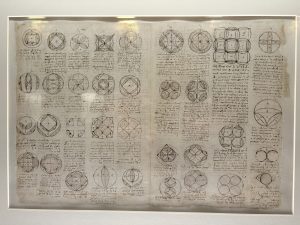 Atlantic Codex – Leonardo da Vinci
3. The cartoon of the School of Athens by Raphael: a bridge with Leonardo
The Ambrosiana also houses the original life-size preparatory cartoon of the School of Athens by Raphael, the drawing on paper made before painting the final fresco in the Raphael Rooms at the Vatican Museums (a stop I've already put on my list for my next free weekend in Rome!).
Observing this masterpiece allows us to glimpse a fascinating dialogue between two Renaissance giants. Before moving to Rome, Raphael had studied Leonardo da Vinci's technique and sfumato for a long time in Florence. To pay homage to him, in drawing the philosopher Plato at the center of the scene, Raphael gave him Leonardo's facial features, even echoing his signature upward gesture.
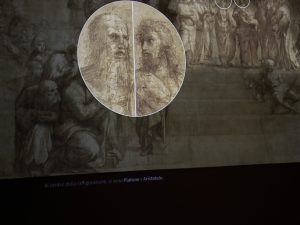 The Cartoon of the School of Athens – Raphael
4. Jan Brueghel the Elder's flower vases: pure botanical inspiration
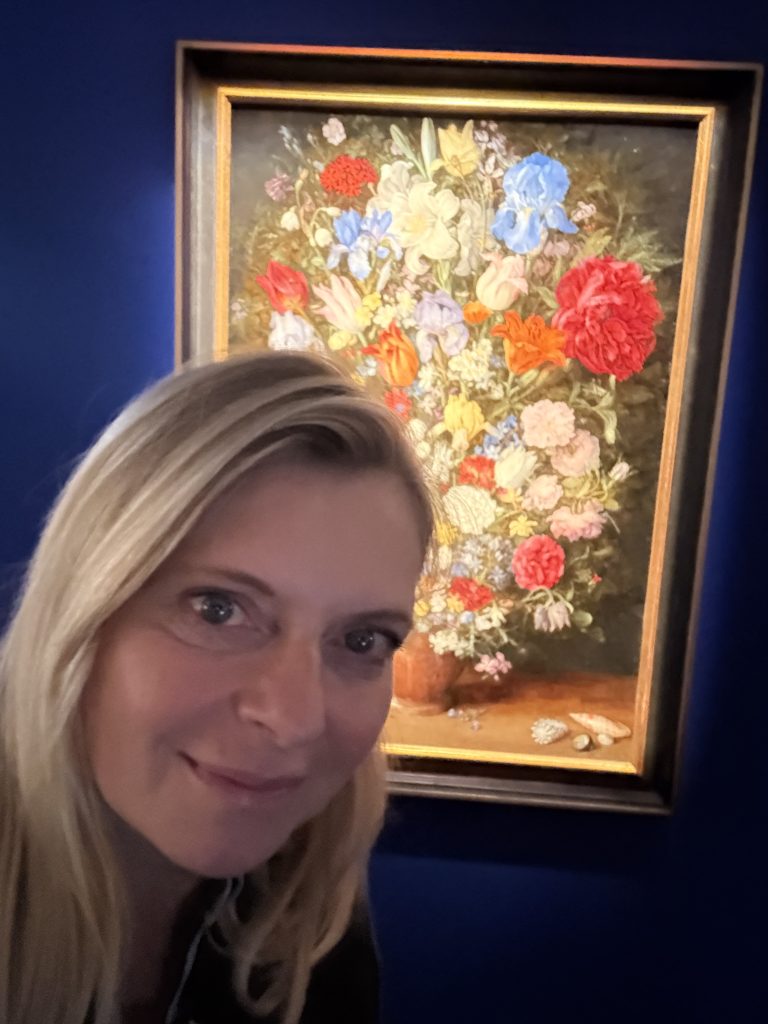
For those who teach and live floral art, the most exciting meeting at the Pinacoteca Ambrosiana is the one with Jan Brueghel the Elder. Although his still lifes appear thousands of times in art history and botanical textbooks, seeing his paintings in person is a completely different experience. Not for nothing, he's one of my favorite painters!
Brueghel possesses a unique ability to narrate the plant world:
-
Botanical richness: combines different varieties of flowers with almost scientific precision.
-
Compositional balance: balances the opulence of the larger corollas with the lightness of thin stems and small insects.
-
Visual emotion: manages to convey the fragility and wonder of each single petal.
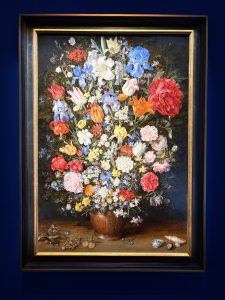 Vase of Flowers by Jan Brueghel the Elder
Why visit the Pinacoteca Ambrosiana to nourish your creativity?
Leaving the museum after observing these masterpieces means returning home with your eyes filled with new color combinations, shapes, and ideas. Whether you're an art enthusiast, a bride-to-be looking for botanical inspiration, or a student of our courses of floral arrangement, the Ambrosiana is the perfect answer to transform a rainy day in Milan into a moment of creative growth.
Do you want to turn inspiration into practice?
If you love observing the details of nature and want to learn how to translate the harmony of the great masters into your compositions, discover the upcoming floral design courses and workshops in the our school or come and take a peek at the story of this visit in the featured stories on my Instagram profile.
And you, what artwork do you immediately associate with the world of flowers? Tell me in the comments!