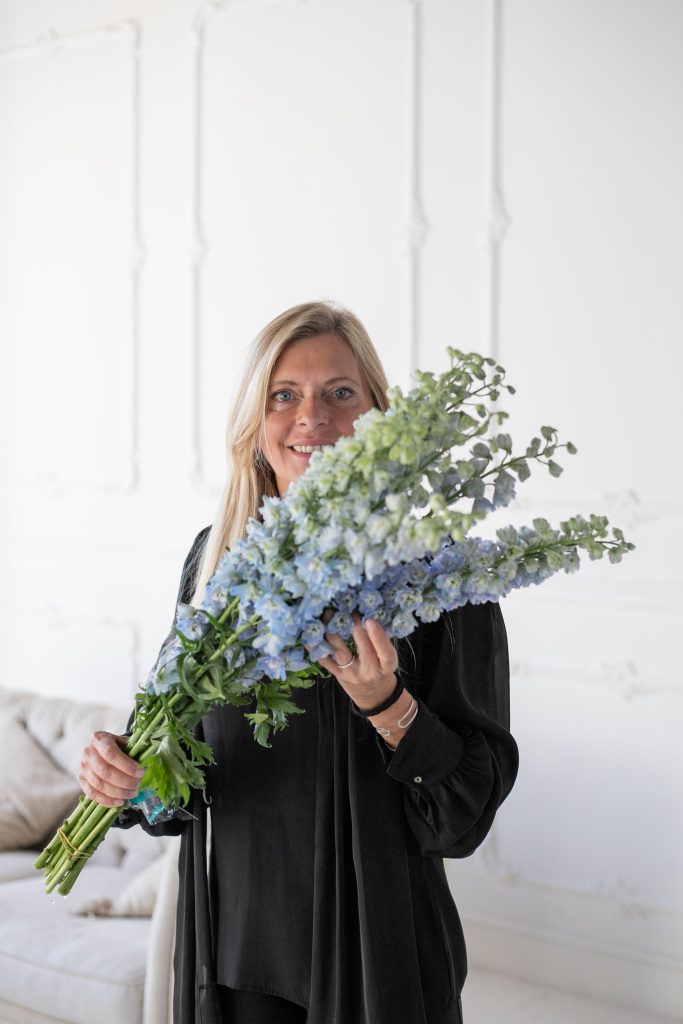
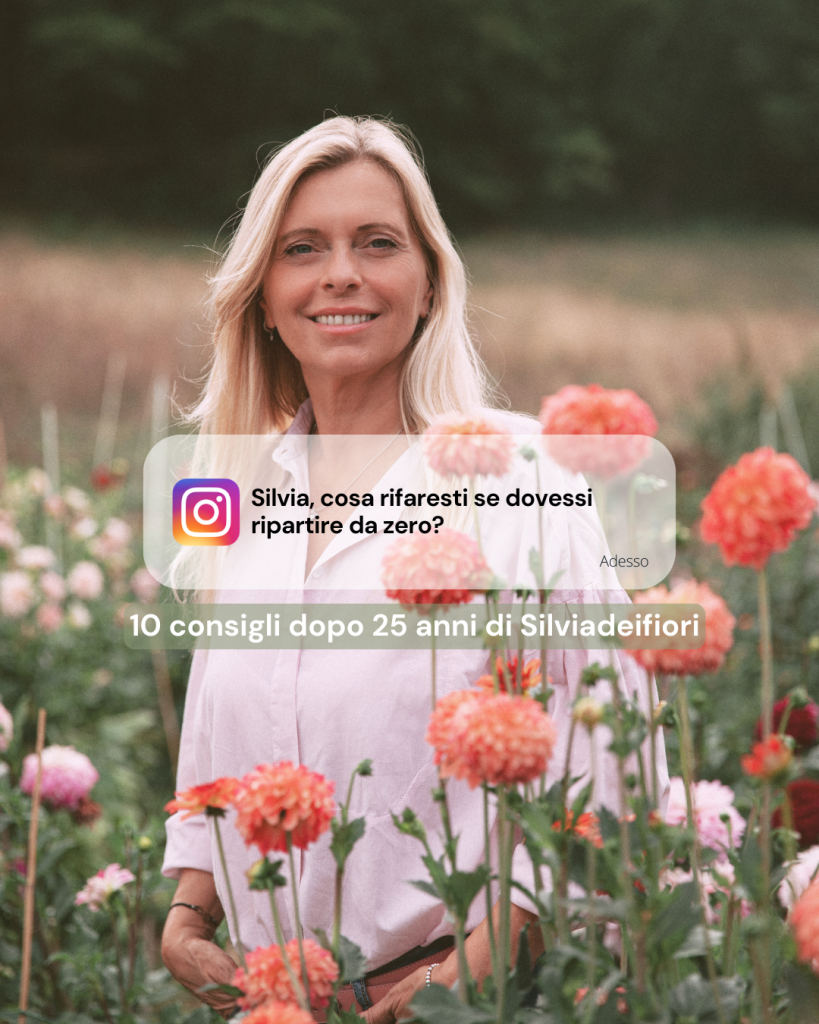
Looking back, it seems almost incredible to me that twenty-five years have already passed since I took my first steps in this world.
Today, with the experience of someone who has seen trends, markets, and even herself change, I've understood that arrangements aren't born solely from flowers, materials, or colors: they come from your gaze, from how you learn to observe spaces, people, and light. From what you feel in your soul even before you begin creating.
If I had to start over today, with my hands free and my mind full of dreams but still defenseless, I would want someone by my side who could tell me certain simple yet fundamental things. Those precious truths you don't find written in technical manuals and that often, unfortunately or fortunately, you only learn over time, through making mistakes, trying, and growing day after day.
If you are just taking your first steps, or if you are looking for your path in floral design,
These are the 10 pillars from which I would start again today:
1) Start with design principles.
If you think it's enough to juxtapose beautiful elements, seeking simple "good taste," the truth is that professionalism lies in knowing how to control space and create an emotion. This taught me to give breadth to the composition by skillfully alternating solids and voids, to create three-dimensionality by exploiting lines and depth, and to guide the viewer's gaze using hierarchy and texture.
Creating scenography does not mean “filling”, it means knowing how to control the emotions of the viewer.
2) Have the courage to go against the grain.
Just as I did then, I would push my method even further today, without fear of challenging the "immutable rules" of the industry. Give space to your style and your personal approach to floral design.
The beauty of this work is precisely this: each of us has a voice, expressed through our colors.
3) Get out of your comfort zone.
When I started out, there were only traditional shops and somewhat dusty floral art schools that didn't represent me. Today, there's a whole world out there: take advantage of the opportunity to explore different contexts to understand what best represents you, and constantly challenge yourself.
Seeing how others work and stealing with your eyes in different environments is the quickest shortcut to understanding who you want to become.
4) “Talk” to flowers.
It sounds like poetic advice, but it's actually pure science. From day one, I've kept a botanical log, and it's been invaluable for studying flowers and recording their maturation and life processes, understanding their reactions to temperature and environment, and learning the specific care each variety requires.
Only by thoroughly knowing the raw material can one acquire the true freedom to create without limits.
5) Give the right financial value to your work.
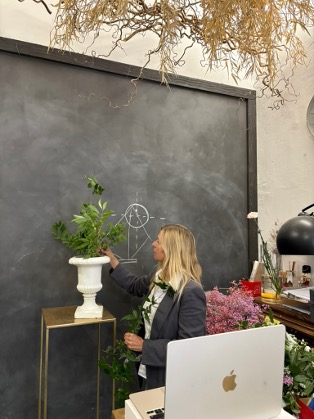
A very important aspect I had to pay attention to right from the start was the financial value. Initially, you only calculate the actual cost of flowers, leaving out the so-called "invisible" costs like planning, labor, or consumables. But by doing so, you very much risk turning your business into a decidedly expensive hobby.
Floral design is an art, but to make it sustainable, you need to treat it like a business. Value your time.
6) Create a “behind the scenes” archive.
A golden tip I'd like to give you is to photograph the before, during, and after of your work. The client doesn't just want to see the final result: showing the process demonstrates true professionalism. Showing how a work is created reveals its complexity and builds trust, showing the client exactly what they're paying for.
Showing your process is the most honest and impactful way to give your work its true value.
7) Make time for public relations.
Even though I'm a cheerful person, I admit that my personality has always led me to focus solely on work and my students, neglecting the all-important public relations. Today, I advise everyone not to make this mistake: get out of the lab, network with wedding planners, venues, and colleagues, and build connections.
Being good at your job isn't enough: you also need to know how to weave the network that allows that work to get noticed.
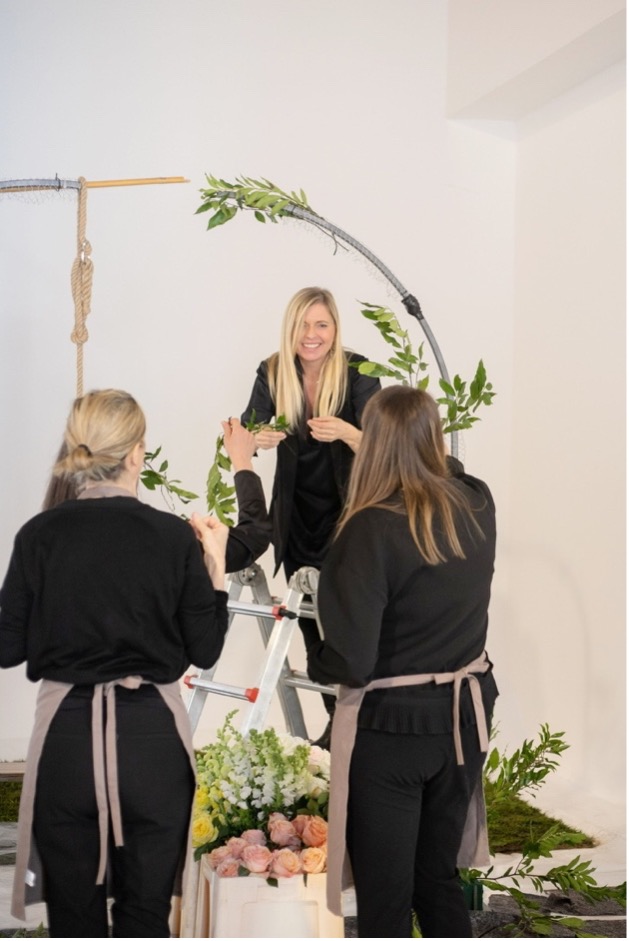
8) Learn to say no.
As in any job, professional growth depends on the boundaries you choose to set. I've learned that accepting any compromise just to get the job done is a trap that saps your style and energy. Always remember: you're not for everyone, and that's okay.
Saying no to the wrong project is the only way to have the time, space, and mindset to say yes to the right one.
9) Invest in your team.
Behind every great entrepreneurial project, there's always a winning team: it's the team that allows you to grow and takes you to the top. We spend three-quarters of our lives working, which is why I've always been careful to create a safe environment where people feel at home, where hard work is shared and talent is protected.
Find the right people, protect their value, and your business will be able to handle workloads and goals that would be unattainable individually.
10) Indulge your curiosity.
If there's one thing I'll never stop doing, it's fueling my desire to learn. The day you think you've arrived in this profession is the day you stop growing. In that regard, I've included a link to an article that might inspire you at the bottom!I'm changing my life! I want to do your job.)
Staying curious means never settling, seeking new stimuli even when you already have experience, and never stopping experimenting.

My wish for your beginning
I wish you to look at every flower and every natural element not only for what it is, but for the story it can help you tell.
I wish you the patience to embrace your mistakes and the strength to defend the value of your time and your style.
The road before you is a blank sheet of paper, a canvas yet to be painted: walk with pride, one step at a time, without haste but with immense curiosity.
May this be the beginning of a wonderful blossoming for you. Happy journey!